

Last month, a homeowner in Spokane Valley had to use a firearm in self-defense at 2 a.m. He'd watched exactly zero YouTube home defense channels. What he had: a loaded Mossberg 500 on his nightstand, a light switch he understood, and a phone he knew how to use. The intruder left through a window. No shots fired. This is how most home defense actually works — and it's nothing like the tacticool setups you see online.
I've been in and around guns for fifteen years, and I can tell you the gap between what works and what sells is massive. YouTube home defense channels need watchtime. They need engagement. They need you stressed about threats that statistically won't happen so you'll keep watching. What you actually need is simpler, cheaper, and more legal than 80% of what gets monetized.
Guns: Pick One and Learn It
The internet will tell you to own seven firearms for home defense. Forget that. You need one gun you've actually trained with, know cold, and can access in 30 seconds from sleep.
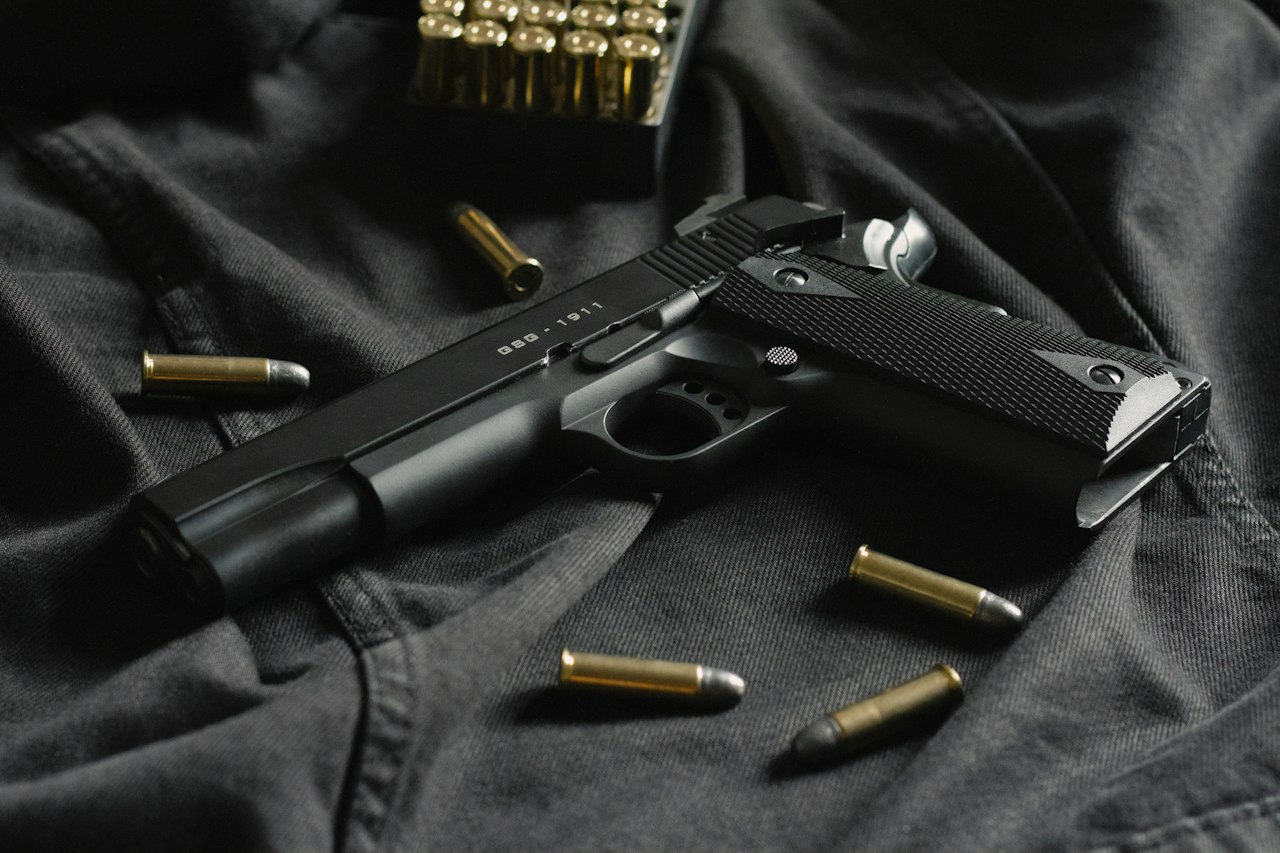
For most people, that's a shotgun or an AR-15. I lean shotgun for simplicity. A Mossberg 500 or Remington 870 costs $350-450 used, shoots heavy buckshot or slugs, and doesn't require you to be a good shot. YouTube guys push AR-15s because they're sexier and get more comments. An AR works fine — better ballistics, lower recoil, faster follow-ups — but it's also more complicated and more expensive. If you go AR, budget $900-1200 for something reliable like an S&W M&P or BCM.
That's it. Not seven guns. One gun.
Stock it with one type of ammo you've actually shot before. Federal or Hornady buckshot if shotgun. Federal XM193 or Speer Gold Dot if AR. Buy 200 rounds now while prices are stable, shoot 100 of it this month to prove it works in your gun, and keep the rest loaded and accessible.
Here's what matters and what doesn't: A tactical light on your gun matters — gives you target ID, shows an intruder you're serious. Night sights don't matter for home defense. A suppressor doesn't matter and costs $1000. A custom trigger doesn't matter. An expensive optic doesn't matter. Shoot your gun, know where it hits at 7 yards, and move on.
Staging: Where Your Gun Actually Lives
This is where most people fail. They buy a gun, store it "safely," then can't access it when they need it.
Your primary home defense gun needs to live where you spend nights. Bedside. If you have a safe, fine — but it needs a fast lock. A biometric safe from Vaultek or Fort Knox runs $300-500 and opens in under two seconds. A cable lock? That's security theater. It takes 30 seconds to cut and you're dead.
Loaded chamber, magazine full, gun ready. That's not reckless if you live alone or with another armed adult. If you have kids, different problem — you need the gun locked and loaded, the key inaccessible to them. A bedside safe solves this. A gun under the mattress doesn't.
If you have a second gun, keep it in a hall closet or common room in a quick-access safe. Same rules apply. No gun buried in a gun case under winter clothes. You won't get to it.
Here's the hard part: practice accessing it twice a month in the dark. Set a timer. Can you get from sleep to gun in hand in 30 seconds? If not, your staging is wrong.
Light: This Actually Saves Your Life
Lighting beats shooting. Every time.
Install motion-activated lights on the outside of your house — front door, back door, driveway. Wyze or Reolink floodlights cost $30-60 and are good enough. Most burglars don't want to be lit up like a Christmas tree. They'll move to a darker house.
Inside, you need flashlights. A good one costs $50-100. I carry a Surefire EB1 on my nightstand ($90, rechargeable, solid). Don't cheap out on inside lights. A dead battery when you need it is a disaster.
A weapon-mounted light on your gun is the right call. Streamlight TLR-7A runs $130 and works. You're not clearing your whole house looking for threats — you're identifying the threat at your bedroom door or in your hallway. Light tells you if it's your kid, the dog, or someone who shouldn't be there.
YouTube sells you whole-house tactical lighting systems. Overkill. You need: outside motion lights, a flashlight on your nightstand, and a light on your gun. That's it. Cost: $250. It works.
Communication: Your Phone and Nothing Else
Call 911. That's your whole communication plan.
Don't call your neighbors. Don't text your wife from a different room. Call 911 and give them your address, describe the threat, and tell them you're armed. Police respond differently to an armed homeowner — they'll be more careful, and they'll know what they're walking into.
Keep your phone on your nightstand. Hardwired landline? Outdated. Get your phone charged and within arm's reach. If you can't reach it, you can't call for help. Sounds simple. Most people fail.
Consider a personal alarm — Sabre or VIPERTEK make them ($15-30). Loud noise, no legal problems, gets attention if you're overpowered. Fits in a bedside drawer.
What doesn't work: Walkie-talkies between rooms (slow, you need hands free), panic buttons that call a monitoring service (you still have to get to it), or assumptions that a dog will alert you (dogs sleep through home invasions all the time).
Training: Do This Quarterly
Buy 50 rounds every three months. Spend an hour at a range shooting your gun at 7, 10, and 15 yards. Nothing fancy. Groups smaller than 3 inches. Reload quickly. Shoot in daylight, then do the same in dim light if your range allows it.
Don't take a $2000 tactical course. Waste of money unless you're a cop. Take a $300 basic pistol course once (or shotgun/rifle equivalent) so someone who knows what they're doing watches you and fixes bad habits. After that, practice yourself.
YouTube's solution: $200 online courses, fake scenario training, stress-inoculation drills in your living room. Real solution: Shoot your gun regularly, know where it hits, and understand where your family sleeps so you don't shoot them.
Home defense isn't complicated. It's boring and simple, which is why nobody monetizes it.
DownRange Bottom Line: Your home defense setup costs $1000-1500 total and takes four decisions: one gun you've trained with, a fast safe on your nightstand, motion lights outside and a flashlight inside, and a phone. Skip the YouTube nonsense about room-clearing techniques, tactical communication systems, and backup guns. Most intrusions are interrupted by lights and a voice saying "I'm armed, police are coming." You're not a SWAT team. You're protecting your family. Boring wins.