
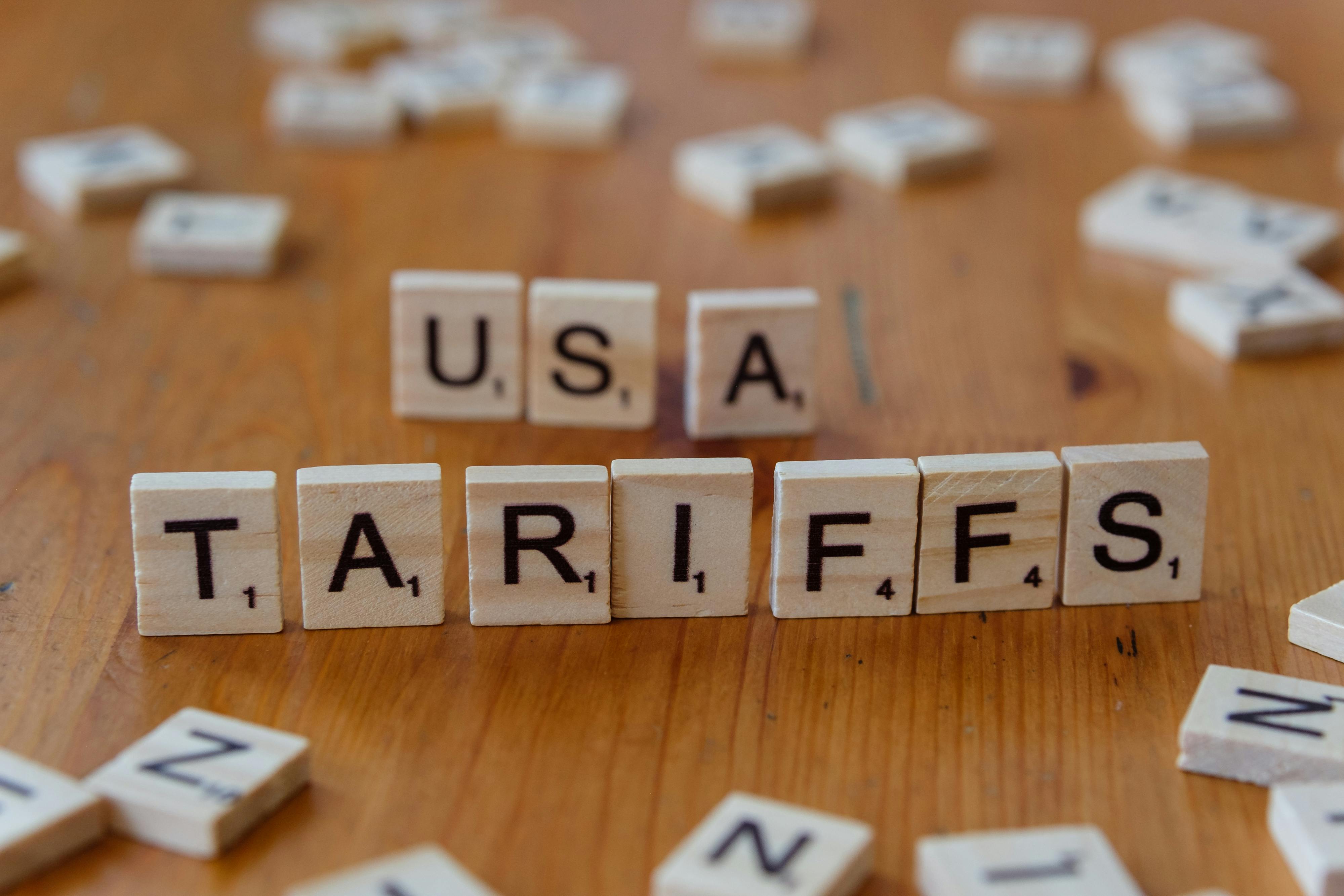

Your Favorite AR Just Got 15% More Expensive — Here's Why
I went to my local gun shop last week and watched a customer pick up a Colt 6920 they'd been eyeing since November. The asking price? $1,649. Same rifle was $1,429 in September. The owner looked me dead in the eye and said, "Tariffs." I've been carrying and buying guns for twenty years. I've seen panic buying. I've seen supply chain collapse. This is different — and it's already here.
The tariff situation hitting gun prices in 2026 isn't theoretical. It's on the shelf. It's in the catalog. Manufacturers are passing costs along, dealers are raising MSRPs, and smart buyers are moving fast on the stuff they know they'll need. This isn't fear-mongering. It's math, and the numbers are real.
Background & Context
Most guns sold in America aren't made in America — not entirely. The supply chain is fragmented across a dozen countries. An AR-15 receiver might come from New Jersey. The barrel could be from Japan or Germany. The bolt carrier group might be machined in the Philippines. The furniture — stocks, grips, rails — comes from Taiwan, South Korea, sometimes China.
When tariffs go up, all of that gets taxed. Steel tariffs hit hard. Aluminum tariffs hit harder. A manufacturer sourcing components internationally suddenly faces 15–25% tariffs on critical materials. They have two choices: eat the cost or pass it to you. None of them are eating it.
This didn't happen overnight. The tariff framework was set in late 2025, and we're now seeing the real-world fallout across Q1 and Q2 of 2026. Ruger, Smith & Wesson, Daniel Defense, Sig Sauer — they've all adjusted prices. Brownells raised their shipping rates. Primary Arms bumped their in-stock ammunition pricing by 8–12 percent depending on caliber. This is coordinated, and it's systemic.
What This Means for Gun Owners
If you're thinking about buying a defensive rifle, a quality pistol, or ammunition in bulk, waiting isn't the move anymore. I know that sounds paranoid. I also know what I saw in 2008 and 2012. Prices don't come back down when tariffs drop — they stay high.
A Glock 19 gen5 that ran $599 in August 2025 is now $649–679 at most retailers. A case of Federal Gold Medal Match 5.56 was $279. It's $319 now. A Daniel Defense DDM4V7 was $1,650. You're looking at $1,899 today. That's real money, and it stacks up fast.
The smart play is ruthless prioritization. Buy what you actually use and actually need — not what you think might be cool. If you carry a Glock 19, get one more mag and a good holster. If you run an AR-15, get ammo and a spare bolt carrier group. If you're thinking about a new rifle, pick a configuration and commit. Don't wait for the perfect setup. The perfect setup costs $300 more per gun now.
Second, buy ammunition now if you train regularly. A lot of people think "I'll just buy what I need when I need it." That math doesn't work anymore. Tariffs on brass, steel, and primers aren't reversing. Hornady, Federal, Remington, Speer — they've all reset their base pricing. Stock the calibers you actually shoot. Not doomsday quantities. But if you fire 200 rounds a month, a six-month supply isn't paranoia. It's mathematics.
The Industry Angle
I've talked to three manufacturers and two major distributors about what's happening internally. None of them want attribution, but the picture is consistent: they're sweating margins.
A mid-size manufacturer told me their cost of goods went up 18% in three months. They can't absorb that and stay in business. So they raised MSRP 12–15% and braced for volume loss. They know fewer people are buying at $1,899 than at $1,650. They're banking on enough sales at the higher price to maintain cash flow while they hunt for cheaper sourcing or domestic alternatives.
Brownells and MidwayUSA have been more transparent. Both have flagged tariff impacts publicly. Brownells specifically stated that tariffs on imported components and ammunition mean higher prices across the board. Neither is happy about it. But pricing power is limited when your supplier's costs go up 20 percent.
The advocacy groups — SAF, FPC, GOA — are all working the legal angles. But the tariff system is complex, and firearms don't get carve-outs like some industries do. This isn't a regulatory fight they can win quickly. It's a structural problem that requires either tariff reduction at the federal level or a massive shift to domestic manufacturing. Neither happens fast.
What I'm watching is whether domestic manufacturers get a boost out of this. If tariffs make imports expensive enough, Ruger and S&W might pick up market share. That could eventually bring prices down if production scales. But we're at least two years away from that mattering. For now, tariffs favor whoever manufactures domestically, and that's a small portion of the market.
What I'm Watching Next
The real test comes in Q3 and Q4 2026. That's when we'll see if demand actually drops or if people just accept higher prices and buy anyway. My guess? Both. Volume drops 15–20 percent. Prices stay elevated.
I'm also watching for a shift toward imports from non-tariff countries. Some manufacturers might source from Mexico, Canada, or allied nations with better trade agreements. That takes time, but it's the path of least resistance. Don't expect it to help prices much, though. Switching suppliers costs money upfront, and companies won't pass those savings to customers.
Here's what I'm telling people at the shop: buy what you know you'll use, buy it now, and don't apologize for it. The industry is adjusting to a new price floor. Smart buyers are adjusting faster. That's the advantage we have — we're not waiting for permission or predictions. We're acting on data we can see today.
If you've been thinking about upgrading your carry gun, getting a rifle for home defense, or building out your training ammunition supply, the window for pre-tariff pricing is closed. It's closed right now. Prices aren't coming back down. Buy accordingly.