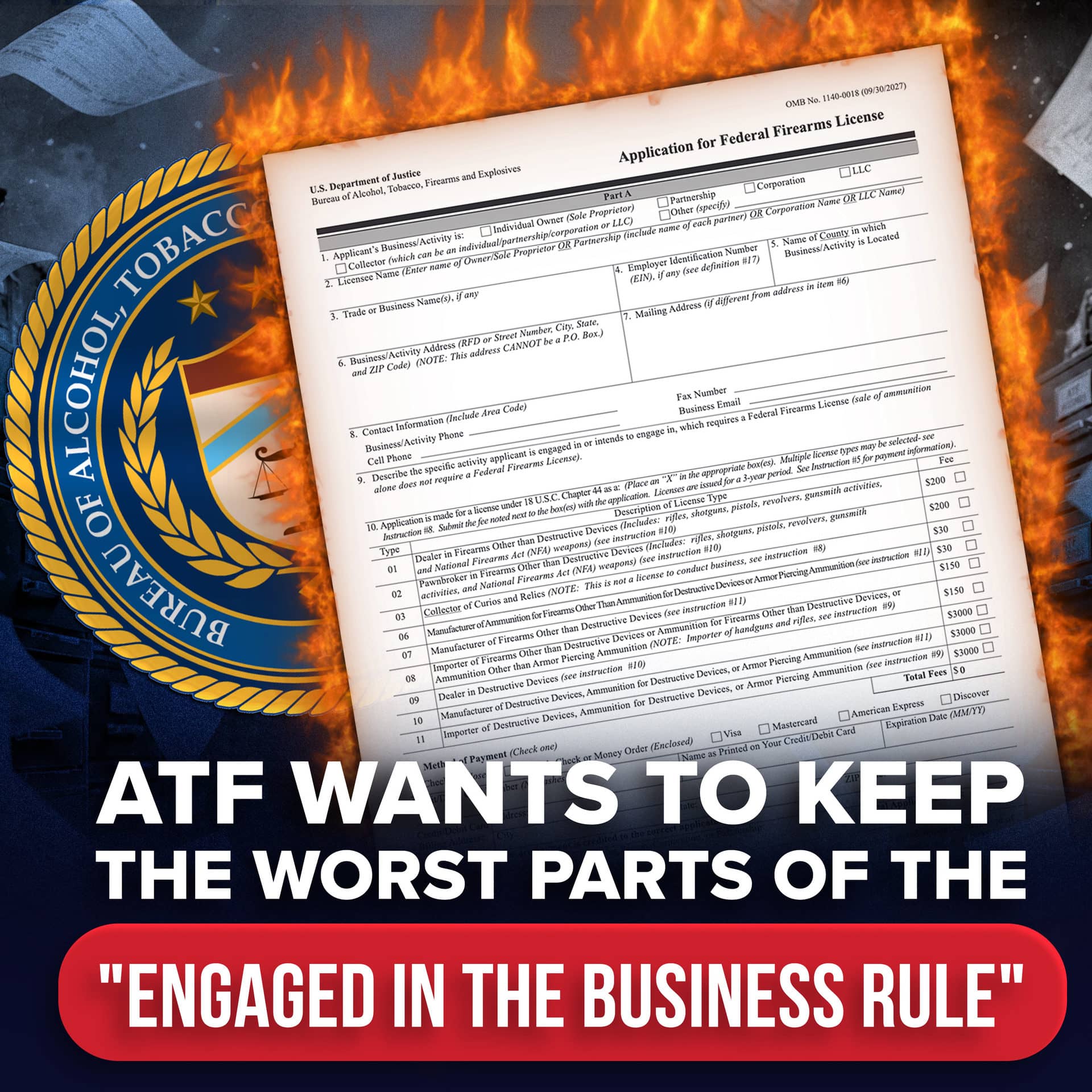
Federal Judge Voids Biden's 'Engaged in Business' Rule; ATF Proposes Identical Replacement
A federal judge struck down Biden's "Engaged in the Business" rule that effectively created universal background checks through regulatory overreach. The ATF responded by proposing a nearly identical replacement rule designed to accomplish the same gun control objective. Gun owners face a critical window to oppose this regulatory maneuver before the new rule becomes final.
What Actually Happened in Court
The original rule attempted to expand the definition of "dealer" to catch private sellers who conducted even minimal firearms transactions. Courts recognized this as an end-run around Congress, which explicitly rejected universal background check legislation. The judge's decision invalidated the rule as exceeding ATF authority.
Instead of accepting defeat, the ATF drafted replacement language that maintains the same practical effect. The new rule uses slightly different wording but targets identical conduct. ATF officials claim the revised approach addresses the court's concerns while preserving the regulatory intent.
This marks classic bureaucratic strategy: when courts reject your policy, repackage it and try again. The substance remains unchanged. Only the presentation shifts.
Why It Matters for Gun Owners
This fight directly affects your right to sell a firearm without federal licensing. Under the original rule, selling even three guns annually could trigger dealer licensing requirements. The replacement maintains similar thresholds through different language.
If the new rule succeeds, private sales face background check mandates. Your ability to sell inherited firearms, trade among friends, or dispose of your collection becomes federally regulated. The practical burden falls hardest on rural gun owners without local gun shops.
More critically, this establishes dangerous precedent. It tells federal agencies that courts striking down rules merely require cosmetic rewrites. Regulatory persistence outlasts judicial decisions. Every gun owner faces compounding restrictions as agencies recycle failed policies.
Daily carriers depend on straightforward legal clarity. Ambiguous dealer definitions create legal traps. A legitimate private transaction could trigger federal charges if prosecutors argue you "engaged in business." The vague standard chills lawful commerce.
Background on the Regulatory Battle
Biden's administration made gun control a priority from day one. The "Engaged in the Business" rule represented an aggressive interpretation of existing law. Congress never granted ATF authority to create universal background checks—lawmakers explicitly rejected such legislation multiple times.
Gun Owners of America and allied organizations challenged the rule immediately. Their legal team argued ATF exceeded statutory authority and violated the Second Amendment. The federal court agreed, finding the rule arbitrary and capricious.
ATF Director Steven Dettelbach signaled the agency would pursue alternative regulatory approaches. The proposed replacement emerged within months of the court's decision. The new rule follows the same legal strategy with adjusted terminology.
Previous ATF rules faced similar cycles. The "Stabilizing Brace" rule survived initial challenges despite widespread opposition. Each reinterpretation pushed regulatory authority further.
DownRange Bottom Line
Gun owners must act during the public comment period. Federal agencies only face accountability when citizens and advocacy groups formally oppose proposed rules. Silent acceptance guarantees adoption.
Document specific concerns about the rule's impact on your personal situation. Mention lawful transactions that could trigger federal prosecution. Reference the court's earlier rejection. Submit comments through official channels before the deadline closes.
Contact your congressional representatives demanding they reassert authority over ATF rulemaking. Agencies cannot be allowed to resurrect struck-down regulations through revised language. The courts rejected the policy once—Congress should prevent second attempts.
This fight requires sustained pressure. Regulatory battles test gun owners' commitment to defending Second Amendment rights through legal channels. Your voice counts directly.