Carney's Team Flags Rising Public Pressure Over Mental Health and Gun Access After B.C. Shooting
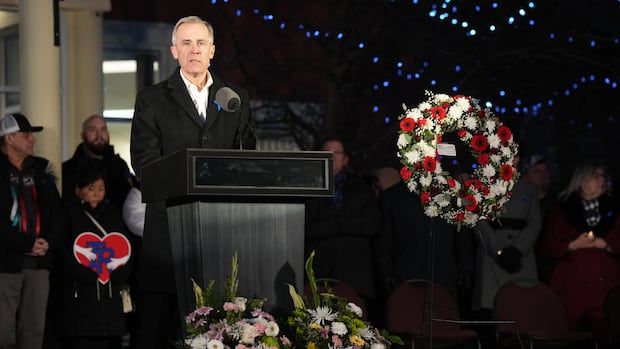
Three days after a mass shooting in Tumbler Ridge, British Columbia in February 2026, Prime Minister Mark Carney's officials warned him that public sentiment was hardening. Online discussions had moved past collective grief into what government analysts called emerging accountability narratives. Citizens were asking specific questions: whether mental health intervention systems failed, how the shooter obtained firearms, and whether warning signs went unheeded. The shift from mourning to accountability meant Carney faced imminent pressure to act on gun control and mental health policy. Government memos flagged the acceleration as politically urgent.
Background and Context
Canada has enforced strict firearms regulations since the 1995 Firearms Act and intensified restrictions repeatedly. The Trudeau government implemented an assault-style weapons ban in 2020 and a handgun freeze in 2023. Despite these controls, mass shootings still occur—forcing Canadian officials to confront the gap between existing law and public expectation. After each incident, the government faces demands to explain why regulations failed to prevent the violence. Mental health systems in Canada have faced chronic underfunding and fragmentation across provinces. When shootings occur, the public narrative typically splits between those demanding stricter gun laws and those pointing to mental health failures as the root cause. Officials use these moments to justify additional restrictions or funding requests.
What This Means for Gun Owners
For Canadian gun owners, the Tumbler Ridge incident signals another likely round of regulatory tightening. The government's internal focus on accountability narratives means Carney will face pressure to announce new restrictions—either expanded licensing requirements, mandatory buyback programs for specific categories, or stricter storage laws. The timing matters: three days post-shooting is when political momentum peaks. Gun owners in British Columbia and federally registered firearm owners should expect legislative proposals within months. Storage laws and licensing changes are most likely targets. The Canadian Shooting Sports Association and provincial hunting groups will likely oppose new measures, but their influence typically diminishes when public anger is high. Registration databases may expand, and transport restrictions could tighten.
Industry Impact
Canadian firearms retailers and manufacturers operate in a shrinking market. The handgun freeze already reduced pistol sales to zero for civilian buyers. A new wave of restrictions could collapse demand for legal firearms further. Ammunition suppliers and shooting range operators may face additional scrutiny or closures if the government pushes for safe storage enforcement that requires separate ammunition storage. The 2020 assault-style ban triggered a mandatory buyback program that cost the government billions and generated legal challenges from the Canadian Coalition for Firearm Rights and individual gun owners. Another buyback would devastate inventory-holding dealers. Long-gun manufacturers serving the hunting market—which is culturally significant in rural B.C.—face reputational pressure and potential regulation targeting common hunting calibers if politicians link them to the Tumbler Ridge shooter's weapon.
What to Watch Next
Monitor Parliament's legislative agenda for the next session. Carney's government will likely introduce new firearms or licensing bills within 60-90 days. Watch for announcements from the Department of Public Safety and the Royal Canadian Mounted Police (RCMP), which administers licensing. The RCMP may announce tighter interpretation of existing licensing rules without waiting for new law. Mental health funding announcements are likely but will be framed as secondary to gun control—a political signaling move. Court challenges to previous restrictions may accelerate if new ones pass; the Federal Court of Appeal is the venue for constitutional challenges under the Canadian Charter of Rights and Freedoms. Gun owner organizations will likely launch public campaigns warning of overreach, but expect those to be overshadowed by victim advocacy groups.
DownRange Bottom Line: The Tumbler Ridge shooting has pushed Canadian firearms policy into another restriction cycle. U.S. gun owners should recognize this pattern: tragedies create political windows for expansive regulation, and governments use internal memos about accountability narratives as justification for laws that go far beyond addressing the specific incident. The Canadian approach—mandatory buybacks, registration, licensing tightening—is the blueprint some American politicians want. Watch how this unfolds to see what arguments succeed and which fail. For Canadian gun owners, now is the time to document your legal collection and consult a lawyer about licensing compliance before new rules are written.