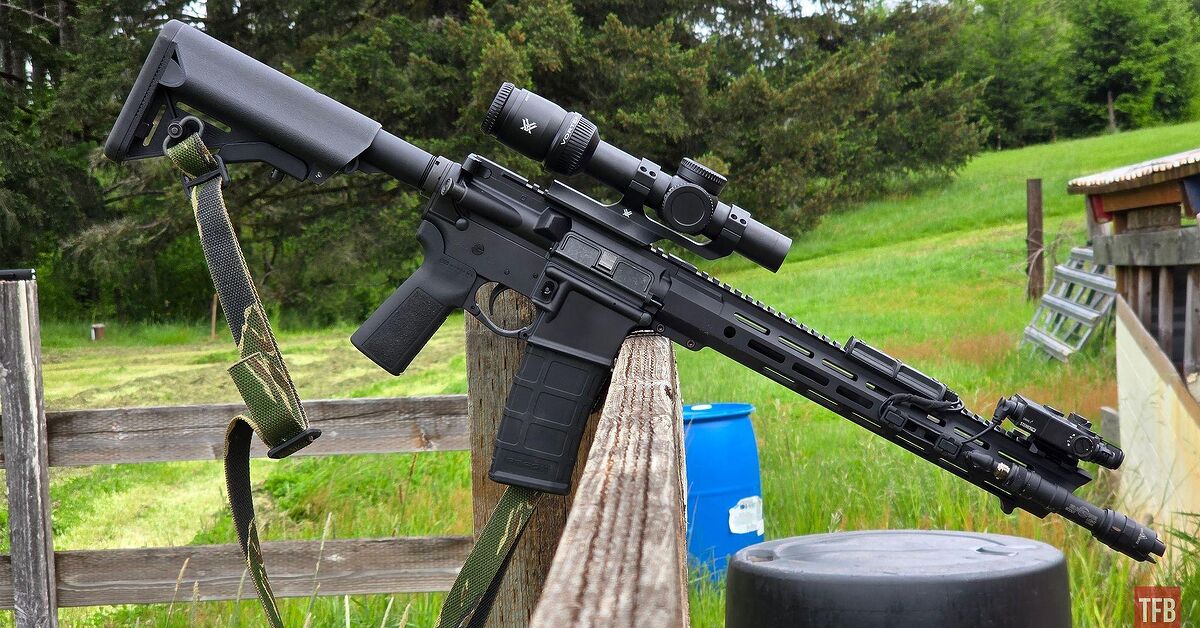
Franklin Armory's OPS-16 Ditches Gas Tube—Piston AR-15 Challenges Direct Impingement Dominance
Franklin Armory built the OPS-16 around a self-regulating piston system instead of the direct impingement design that powers 90 percent of modern AR-15s. This fundamental departure from the gas-key-and-tube architecture raises a practical question for working shooters: does independent piston cycling reduce carrier tilt, extend component life, and lower maintenance demands—or does it introduce unnecessary complexity to America's most reliable rifle platform?
How the Piston System Replaces Stock AR Gas Handling
Traditional AR-15s funnel propellant gases backward through a tube mounted above the barrel. That gas pressure hits the bolt carrier's key, driving the entire carrier group rearward. The OPS-16 reverses the equation. A short-stroke piston sits directly above the barrel and moves independently when struck by gas. The piston rod transfers that energy to the bolt carrier without gas ever entering the receiver. The bolt still cycles, but the carrier experiences less direct thermal stress and fewer corrosive byproducts.
Franklin Armory designed the piston to self-regulate, meaning it automatically adjusts dwell time based on ammunition type and suppressor use. Heavier ammunition creates more back-pressure; the system compensates internally rather than requiring manual adjustment or different buffer springs. Shooters don't need to swap gas blocks or tune for subsonic rounds.
Carrier Tilt and Component Longevity
In standard direct impingement rifles, gas pressure bearing down on one point of the bolt carrier causes it to tilt slightly during cycling. Over thousands of rounds, this tilting wears the carrier rails unevenly and can accelerate bolt lug erosion. The OPS-16's piston rod connects at a lower angle, distributing rearward force more evenly across the carrier's width. Early testing suggests this geometry reduces carrier tilt and extends the life of expensive components like bolts and firing pins.
The rifle's receiver environment stays cleaner too. Carbon and powder residue that normally build up inside the carrier channel—creating friction, fouling, and requiring frequent field-stripping—stay contained within the piston assembly. Shooters report wiping down the piston rod and continuing fire, whereas a direct impingement gun eventually needs a full BCG cleaning to maintain reliability.
Practical Implications for Daily Carriers and Duty Use
Suppressed fire becomes less finicky. Most shooters running suppressors on direct impingement rifles adjust gas blocks or swap buffer systems to prevent carrier bounce and reliability issues. The OPS-16's self-regulating piston handles suppressed and unsuppressed fire without tuning, making it appealing to shooters who switch between configurations or run different ammunition without warning.
Maintenance intervals stretch. Less receiver fouling means fewer disassembly cycles, valuable for users in austere environments or those carrying for self-defense who want fewer reasons to take the rifle apart. Bolt life increases measurably compared to standard AR-15s fired through similar round counts.
DownRange Takeaway
The OPS-16 isn't revolutionary—piston-driven ARs have existed for over a decade—but Franklin Armory's self-regulating design solves real frustrations with suppressors and ammunition variability that plague direct impingement users. The trade-off is weight and cost. Piston systems add roughly 12 ounces and several hundred dollars to a rifle's price. For patrol carbines, duty rifles, or shooters running suppressors daily, that investment pays dividends in reliability and reduced maintenance. For range guns or backup rifles fired a few times yearly, the standard direct impingement platform remains the smarter choice. The OPS-16 succeeds by doing one thing differently and doing it well, rather than chasing marginal gains across an entire platform.