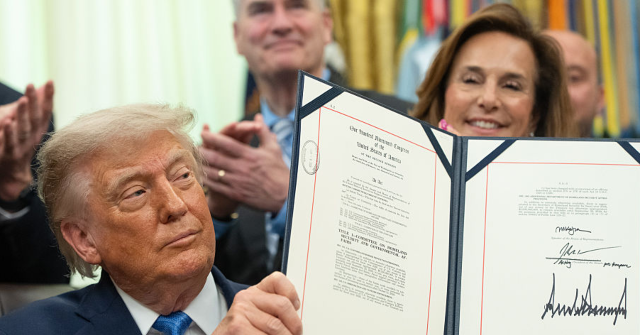
Trump Signs DHS Funding Through 2028—What Border Enforcement Means for Gun Owners
President Trump signed the Secure America Act on June 10, 2026, locking in Department of Homeland Security funding through the end of his administration. The legislation replaces temporary continuing resolutions with permanent appropriations for federal law enforcement, border security, and immigration enforcement operations.
Full Funding Eliminates Budget Uncertainty
The act provides complete DHS funding without annual renewal deadlines. This stable budget allows the agency to maintain consistent staffing, training, and equipment purchases across all divisions. Border Patrol, ICE, and CBP operations now operate under predictable funding cycles instead of navigating short-term stopgap measures that have plagued the department for years.
The legislation also funds federal law enforcement operations that intersect with firearms enforcement—including ATF activities, FBI background check systems, and DEA coordination on gun trafficking investigations. Stable appropriations mean these agencies can hire, retain, and deploy personnel without annual uncertainty.
What This Means for Gun Owners
Permanent DHS funding directly affects Second Amendment advocates in multiple ways. ATF operations depend partly on DHS coordination for investigations involving weapons trafficking across borders. Better-funded border security theoretically reduces illegal gun smuggling into the United States—a talking point that pro-gun advocates have used to argue for stricter border enforcement.
However, gun owners should monitor how this funding flows to specific agencies. Enhanced DHS resources could expand background check infrastructure, improve data sharing between law enforcement agencies, and increase coordination on firearms investigations. The FBI's National Instant Criminal Background Check System (NICS) operates under DHS coordination structures.
Additionally, stable federal law enforcement funding allows agencies to pursue long-term enforcement strategies without budget cycles interrupting operations. For gun owners, this means consistent—and potentially more aggressive—enforcement of existing federal firearms laws, regardless of political climate shifts.
DownRange Analysis
The Secure America Act represents a significant shift in how federal law enforcement operates. Eliminating continuing resolutions removes leverage points that Congress traditionally uses to negotiate agency policies. Gun rights advocates lost these negotiation opportunities—they've previously used budget fights to restrict ATF authority or block specific enforcement initiatives.
Trump's administration signaled that border security and immigration enforcement take priority in this funding structure. This aligns with administration rhetoric on second amendment rights, but permanent appropriations also lock in resources for federal firearms enforcement that typically operates regardless of which party controls Congress.
Gun owners should understand that stable federal law enforcement funding cuts both ways. Better-resourced agencies enforce laws more consistently. For gun owners, that means both stricter enforcement of federal firearms regulations and potentially more aggressive prosecution of straw purchases, illegal possession, and trafficking cases.
The act provides no sunset clause or annual review mechanism. Congress cannot use future budget battles to restrain agency authority or demand policy changes. This permanent structure favors executive branch control over DHS operations without legislative leverage points typically available during budget negotiations.
Source: White House Official Statement