Virginia Prosecutors Refuse to Enforce Spanberger's Assault Weapon Ban
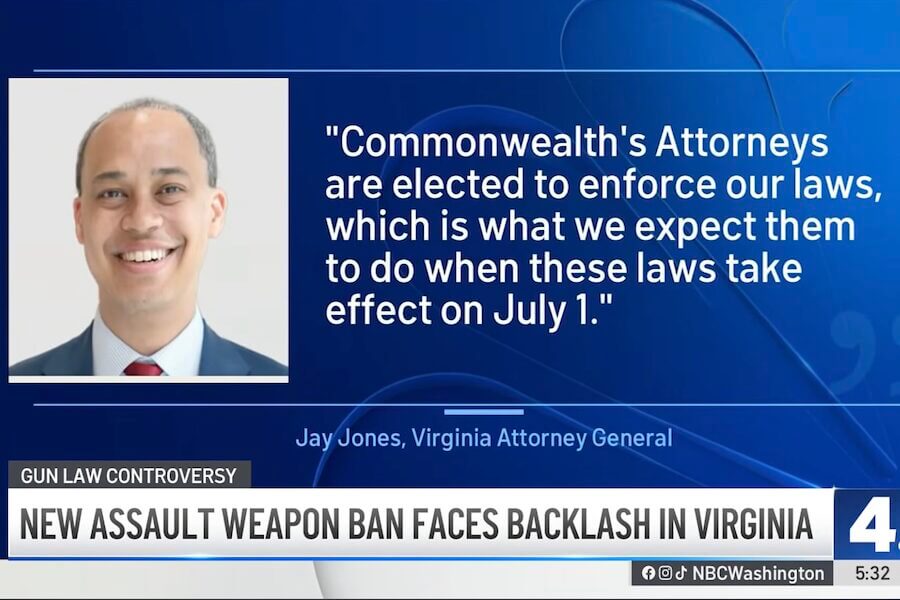
Virginia Governor Abigail Spanberger signed an assault weapon ban scheduled to take effect July 1, 2026, but prosecutors across multiple Virginia jurisdictions are publicly refusing to enforce it. District attorneys and Commonwealth's attorneys have stated they will not prosecute violations, citing constitutional doubts about the law's validity under the Second Amendment. The refusal represents a rare and direct challenge to state law enforcement by elected prosecutors who control charging decisions. No specific number of jurisdictions has refused, but the announcement signals deep skepticism among Virginia's law enforcement leadership about the ban's legal footing.
Background and Context
Virginia's new ban follows the U.S. Supreme Court's 2022 decision in New York State Rifle & Pistol Association v. Bruen, which narrowed the government's ability to restrict firearms based on public safety rationales alone. Since Bruen, courts have struck down similar bans in California, Illinois, and New Jersey. Virginia attempted an assault weapon ban in 2020 that stalled; Spanberger's 2026 version revived the effort in a state with a Democratic legislative majority. The prosecutors' refusal echoes similar non-enforcement positions taken by sheriffs nationwide, but prosecutors hold the power to charge—making their refusal a direct brake on enforcement. Virginia's courts have not yet ruled on whether the ban survives Bruen scrutiny.
What This Means for Gun Owners
Virginia gun owners who possess firearms covered by the ban face legal uncertainty but practical protection through prosecutorial discretion. The law prohibits ownership and transfer of certain semi-automatic rifles and magazines holding more than 17 rounds, effective July 1. However, a prosecutor's refusal to charge means a gun owner in that jurisdiction faces no criminal penalty for possession—though civil liability and employment consequences remain possible. Gun owners in jurisdictions where prosecutors refuse enforcement have significantly lower legal risk than those in areas where prosecution remains active. Virginia residents should identify their home jurisdiction's prosecutor and confirm the refusal position before the effective date. No amnesty or buyback program has been announced.
Industry Impact
Second Amendment advocacy groups including the Second Amendment Foundation and Firearms Policy Coalition have indicated they are preparing legal challenges. Manufacturers and dealers have signaled they will pause sales of affected firearms into Virginia pending court rulings. The National Rifle Association has publicly opposed the ban and pledged to challenge it in court. Prosecutorial refusal to enforce complicates the state's ability to defend the law in litigation, as courts may question the state's commitment to the statute. Virginia dealers expect the state's courts to rule on constitutionality within 12 to 18 months, likely triggered by NRA or FPC lawsuits.
What to Watch Next
The first test will come if any Virginia court issues a temporary restraining order or preliminary injunction blocking enforcement before July 1. Expect litigation within weeks of the law's effective date. Watch for Second Amendment Foundation v. Commonwealth of Virginia or similar cases filed in the U.S. District Court for the Eastern District of Virginia or Virginia state courts. A federal three-judge panel will likely hear the case; the Fourth Circuit Court of Appeals has previously leaned conservative on Second Amendment questions. The state attorney general's office will defend the law, but prosecutorial refusal to enforce strengthens legal arguments that the law is unworkable. A decision could arrive by late 2026 or early 2027.
DownRange Bottom Line: Virginia prosecutors just handed gun owners a practical win while the courts decide the legal one. If you own affected firearms in a non-enforcing jurisdiction, you have breathing room. Don't assume that protection lasts—federal courts will rule, and one adverse decision could flip your status from legal to criminal. Track your local prosecutor's position now and subscribe to Second Amendment Foundation and NRA updates on Virginia litigation. This is a live case, and it matters.