One-Handed Shooting Skill Most Carriers Skip — Here's Why That's Dangerous
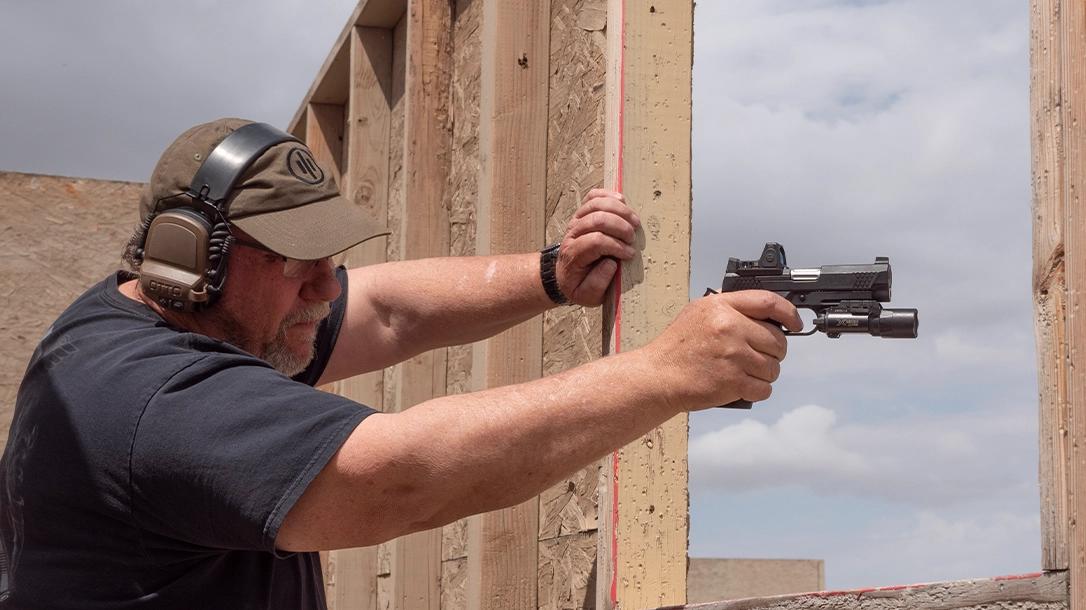
A firearms professional with law enforcement and SWAT experience has shifted stance on one-handed shooting after decades dismissing it as unnecessary. The skill remains practically absent from most gun owners' training regimen, despite recurring real-world scenarios that demand it. Age, teaching experience, and honest assessment of actual defensive situations have reshaped thinking on what separates trained carriers from those who only think they are.
Key Details
The shift in perspective came from experience: As a uniformed officer, one-handed shooting seemed irrelevant. As a SWAT operator, it appeared wasteful. Only through years of instruction and confronting actual self-defense mechanics did the necessity become undeniable.
- Real defensive encounters frequently involve secondary tasks — controlling a threat, protecting a family member, or managing an obstacle.
- Training doctrine has historically underemphasized one-handed technique, creating a gap between range performance and street reality.
- Recognition of this gap has forced reassessment among instructors willing to adjust methodology based on evidence rather than tradition.
Why It Matters for Gun Owners
Concealed carriers practice two-handed presentations from holster, reload drills, and accuracy work — all valuable. But defensive scenarios rarely stay clean. An armed homeowner defending family might need one hand on a child or elderly relative. A business owner in a robbery might be on the phone. A driver struck from the side cannot present with both hands free. Yet most commercial training courses skip this entirely, and most shooters never fire a pistol one-handed past 7 yards.
This gap compounds when stress physiology hits. Fine motor control fails first. Presentation becomes choppy. Trigger control degrades. Without specific one-handed repetitions, your support-side arm becomes a liability rather than a tool. The skill demands dedicated, deliberate practice — not range time filler.
DownRange Analysis
The pushback against one-handed shooting stems partly from ego. Instructors built their reputation on established protocols. Admitting an oversight costs authority. Carriers want validation, not critique. But honest assessment wins gunfights.
One-handed work forces exposure of actual deficiencies — grip strength imbalances, trigger control dependency on bilateral support, poor stance under uneven weight distribution. These show up hard when only one hand works. That's precisely why it matters. Train your weaknesses, not your strengths.
Start with distance work: 25 yards, one-handed, dominant hand only, from low ready. Then support-hand work. Then precision drills at 3 yards. Most carriers will discover they shoot worse one-handed than they imagined — which means they've found their actual training need. Ignore this gap at your own risk.